All posts by Tristan Taylor, Features Editor

Red Sox fire Alex Cora, promote Chad Tracy

Hours after a 17-1 blowout victory over the Baltimore Orioles on Saturday, the Boston Red Sox dismissed manager Alex Cora as well as much of the coaching staff in a move that stunned Red Sox Nation.  Now, fans are wondering what’s next for the team.

After a disastrous 10-17 record to start the season, the team’s Chief Baseball Officer, Craig Breslow, apparently decided that Cora’s exit would need to come sooner than the end of his contract in 2027.  

The Red Sox issued a statement thanking Cora and much of the coaching staff for their hard work, while ushering in a new era to be kicked off by Chad Tracy, who, prior to being named interim manager, managed the team’s Triple-A affiliate in Worcester.  

Tracy has been coaching since 2015, which followed an eight-year career in the minor leagues and independent baseball.

Also axed were bench coach Ramon Vazquez, hitting coach Peter Fatse, assistant hitting coach Dillon Lawson, third base coach Kyle Hudson, and major league hitting strategy coach Joe Cronin.  

Additionally, game planning coordinator and former player Jason Varitek was removed from his role and will be reassigned in the coming days.

Tracy’s first game as manager, which happened on Sunday, did result in a 5-3 victory over the Orioles.  However, his inexperience as a major league manager drew concerns from loyal fans.  One such fan is NECC student Aidan Lohan, who stated “It’s like we’re in the 1920s again, and I’m worried it could get worse.”  Lohan’s comparison isn’t exactly far-fetched.  During the 1920s, the Red Sox had five managers, and with Tracy only serving as interim manager, the team could approach that number yet again.  Tracy is the third person to manage the team this decade, with Alex Cora serving as manager from 2021 to just this past weekend, having previously held the same post in 2018 and 2019.  During Cora’s one year suspension for his involvement in the Houston Astros’ sign-stealing scandal, Ron Roenicke served as manager for the 2020 season.

Many Red Sox players, including Garrett Whitlock, Garrett Crochet, Roman Anthony, and more have publicly voiced their displeasure at the team’s actions, with a few even going so far as to claim responsibility for the team’s poor record.  

However, Tracy was welcomed with open arms by those who came up in the Red Sox farm system, including the aforementioned players, as his experience as the Triple-A manager has allowed him to form bonds with the younger core of the team.

NECC student Jake Axford also made his thoughts clear on the situation, calling it “shocking, unexpected, and dramatic.”  Describing the situation as a total rehaul, he further stated “It suggests to me that this is a completely new era for the Red Sox instead of minor adjustments.  It’s also the first in-season manager firing under John Henry’s ownership.”

This is the first in-season firing since Jimy Williams was fired during the 2001 season, and it came at a time where the team finally started to get out of a noticeable slump.  Some fans, including Axford, called it “unavoidable”, but questioned why it happened when it did.

John Mulcahy, the sports editor for the Observer, said “I’m not surprised and I don’t blame them for doing it, I’m just shocked that it happened when it did.  They were finally starting to play better, and it felt oddly timed.”

Also joining the staff are Chad Epperson as the third base coach, Collin Hetzler as the hitting coach, first base coach Pablo Cabrera, and assistant hitting coach Jack Simonetty, with more changes possible in the coming days.

For now, the Red Sox will have to adjust to a new manager and a new coaching staff, with coaches promoted from Triple-A and Double-A to join Tracy’s new staff, which retains bullpen coach Chris Holt, pitching coach Andrew Bailey, catching instructor Parker Guinn, and Jose David Flores, who moves rom first base coach to bench coach.  

The full results of these changes are yet to be seen, and the only thing that the loyal fans of the Red Sox can do now is wait to see what happens next.

A recap of the 2026 Boston Marathon

On April 20, over 30,000 people gathered to participate in the 130th Boston Marathon.  The 26.2 mile race, known for being the toughest of the major marathons, started in Hopkinton as it has since 1924 and concluded right on Boylston Street in Boston.

The event, which has been contested annually since 1897, is contested on a course with steep, quad-thrashing downhills for the first 16 miles, followed by a five mile stretch of hills in Newton, including one named “Heartbreak Hill”, a steep hill named for a moment in the 1936 marathon, when Ellison Brown, who was leading, was passed by defending champion Johnny Kelley.  This gave Brown enough motivation to overtake Kelley once more and win the event.  It is also the spot where most runners “hit a wall” and start to struggle.  The last few miles go right into Boston’s iconic city streets, where a winner is eventually crowned.

Kenyan runner John Korir won the event in the men’s division with a time of 2:01:52, breaking the record held by Geoffrey Mutai since 2011.  This was also Korir’s second victory in Boston, as he won the 2025 Marathon.  Also competing in the event were elite runners Alphonse Simbu (of Tanzania) and Cyprian Kotut (of Kenya).

Sharon Lokedi of Kenya won the women’s division for the second time, beating out fellow Kenyans Loice Chemnung and Mary Ngugi-Cooper.  Lokedi’s time was 2:18:51.  Jessica McClain set a course record for American women, placing fifth.

This year saw many notable participants compete.  In the men’s division, NHL legend Zdeno Chara, 1968 men’s champion Amby Burfoot, former NBA player Chris Herren, and Dropkick Murphys guitarist Jeff DaRosa all completed the course.  In the women’s category, former soccer player Kristine Lilly, former first daughter Chelsea Clinton, 2018 women’s champion Desiree Linden, and former astronaut Sunita Williams all competed.  In particular, Williams’ participation was notable, as even though she had a time of 5:52:49, she made a comeback after a lengthy 286 days on the Boeing Starliner during the failed mission.  She was the first person to ever run a marathon in space, and previously ran the marathon in 2008.

At NECC, students were quite surprised by the news.  Sports editor John Mulcahy called Korir’s record “unbelievable”, further stating “it’s crazy how far people have come in running.”  Many on social media thought Mutai’s record was unbreakable, and some even referred to Korir as superhuman for breaking Mutai’s record.

Of course, the Boston Marathon also had some remarkable stories.  Thirteen years ago, the marathon was abruptly stopped by the tragic events of April 15, 2013, when two homemade bombs detonated near the finish line, killing three and injuring hundreds of others.  This year, Henry Richard, the older brother of bombing victim Martin Richard, finished the race with a time of 4:34:13.  His perseverance thirteen years after unimaginable tragedy has gained attention on social media.

Going forward, next year’s Boston Marathon will be the 131st edition of the event, and the qualifying times have not yet been posted.  Interested runners should also be aware of a cutoff time in the event that there are more qualifying runners than there are slots for the race.  If interested, runners can visit www.baa.org, the website of the Boston Athletic Association.

Artemis II returns to Earth

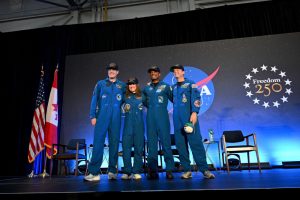
Four astronauts are posing for a picture
The crew of Artemis II. From left to right: Jeremy Hansen, Christina Koch, Victor Glover, and Reid Wiseman Photo courtesy of NASA
A picture of a solar eclipse in space
The solar eclipse photographed by Artemis II on April 6 Photo courtesy of NASA

The Artemis II mission has concluded after ten days in space.  Launching on April 1, the astronauts on board (Reid Wiseman, Victor Glover, Christina Koch, and Jeremy Hansen) conducted a lunar flyby, marking the first crewed flight outside of low Earth orbit since Apollo 17 in 1972.

Early concerns had shrouded the outcome of the mission in doubt.  After the failed Boeing Crewed Flight Test in 2024 left two astronauts stranded aboard the International Space Station, many feared a similar outcome.  After the uncrewed Artemis I mission returned with a highly damaged heat shield, fears spread regarding an outcome similar to the Columbia disaster in 2003.

The mission also was scheduled to be part of the Lunar Gateway program, which was a plan to build a replacement for the International Space Station, which is approaching its end-of-life date, scheduled for 2030, followed by a controlled de-orbit into Point Nemo, the area farthest from land, in 2031.  However, the Lunar Gateway program was canceled in early 2026.

After being delayed numerous times between early 2019 and March of this year, Artemis II successfully launched on April 1, 2026.  Early on in the mission, essential life support systems aboard the spacecraft, such as the toilet and the water dispenser, were damaged in a concerning incident.  On April 6, the crew passed by the dark side of the moon, capturing a photo of a solar eclipse.  During this time, the crew lost contact for around 40 minutes, which was planned.  The crew also created numerous videos during their time in space, which led to Saturday Night Live parodying them on their April 11 show.

On April 10, Artemis II re-entered the Earth’s atmosphere, resulting in a splashdown off the coast of California after nine days.  The mission, which was deemed successful, had already been anticipated because of a number of firsts.  Victor Glover became the first person of color to fly by the moon.  Likewise, Christina Koch became the first woman to achieve the feat, while Reid Wiseman set the record as the oldest person to do so, and Jeremy Hansen became the first Canadian to complete a lunar flyby.  This crew inspired many on social media.

One NECC student, Kylee DeAngelo, said it was “inspiring”, further stating “I think there are benefits to this.  They flew by the dark side of the moon, which hasn’t been done in over 50 years.  They’re discovering new things, and you can only go up from there.”

Further echoing DeAngelo’s claims was another NECC student, Aidan Lohan, who stated it was not only “very interesting”, but that “it opened the door for the future of space exploration.”

However, some felt that this historic mission should have happened sooner.  NECC student Danny St-Pierre was among those who felt this way, although he did express positive thoughts on the matter, stating “I think it was long overdue.  

This could very well be the catalyst for further space exploration and research.  I can’t wait to see where it leads us”, jokingly adding “However, I was told by my family to not leave the planet.”

Artemis II will be followed up by Artemis III, with that mission expected to take place in mid-2027, followed up by Artemis IV, which is expected to be the first crewed landing on the moon since Apollo 17 in 1972.  Artemis IV is currently set to take place in early 2028.

Until then, humanity will have to wait for what will be, to quote the late Neil Armstrong, “one small step for man, one giant leap for mankind.”

We at the Observer would like to congratulate the crew of Artemis II on a successful mission and subsequent return to Earth.

Venezuela wins World Baseball Classic in upset victory

In the final game of the World Baseball Classic, Venezuela won their first world championship in what was an upset victory over the heavily favored United States.  

With star pitchers Eduardo Rodriguez and Ranger Suarez on the roster, and position players like Salvador Perez, Willson Contreras, Wilyer Abreu, Luis Arraez, and Eugenio Suarez on the offensive side, the Venezuelans were sure to get far in the tournament, but were not expected to win at all.

The World Baseball Classic is baseball’s equivalent to the FIFA World Cup, with national teams often consisting of professional players from the MLB, foreign leagues such as the NPB, KBO, and CPBL, and even minor, independent, and amateur leagues.  

First held in 2006, the tournament had only seen three nations become world champions prior to Venezuela’s underdog win: Japan (2006, 2009, and 2023), the Dominican Republic (2013), and the United States (2017).  

With reputations as past champions, all three nations were expected to dominate the tournament, with Japan, being the reigning champions, having been expected to face off against the United States in a rematch of the 2023 finals.

However, issues in the tournament arose early on, with insurance companies tied to the MLB denying coverage to many star players who initially planned on representing their nations.  In particular, the Dominican Republic, Puerto Rico, and Venezuela were hit hard.  Venezuela was hit harder than most, with star players Jose Altuve and Miguel Rojas being denied coverage.

One NECC student, Aidan Lohan, felt as though the Dominican Republic should’ve won the tournament, and openly criticized the MLB’s insurers, stating “It’s awful.  Players shouldn’t have to miss this tournament because of an insurance policy.”  

Lohan is not alone in feeling this way, with many baseball fans expressing disappointment on social media, and he specifically pointed out that players like Yainer Diaz and Elly De La Cruz would’ve helped the Dominican team go farther than their knockout in the semifinals.

Venezuela’s path to becoming world champions was anything but easy.  Facing off against the Netherlands, the Dominican Republic, Nicaragua, and Israel in the round-robin pool stage, the Venezuelans won three of their four games and advanced to the knockout stage, only losing to the Dominican Republic.  

Venezuela then knocked out Japan, the reigning champions, in the quarterfinals, before defeating Italy, another underdog team, in the semifinals.  

Many on social media have expressed their belief that the Italian team likely would have advanced farther had an injury to catcher Kyle Teel not occurred.

In the finals, Venezuelan infielder Maikel Garcia’s third inning sacrifice fly allowed catcher Salvador Perez to score, bringing the score to 1-0. 

 This was followed by a homer to center field by Venezuelan outfielder Wilyer Abreu in the fifth inning to make it a 2-0 ballgame.  An eighth inning attempt to surge from behind resulted in a two-run homer from American outfielder Bryce Harper to bring him and infielder Bobby Witt Jr. in to score, tying it up at 2-2.  However, the Americans could not continue their rally into the ninth, when Venezuelan infielder Eugenio Suarez doubled to bring in pinch runner Javier Sanoja to end the game with a score of 3-2.

John Mulcahy, the Sports Editor for the Observer, stated that although he felt disappointed that the American team did not win, “it was still pretty cool to see Venezuela win.”  

Many expected the Americans to win, but it was simply not in the cards this time around.  NECC student Shane Smith feels that the game was “a pretty close matchup until the end.”  

For the Venezuelans, this matchup was their magnum opus, as it was their first tournament championship in any international tournament, and it was a huge achievement for those on the team.  

Venezuela has been in political and economic turmoil since 2010, with a massive crisis erupting following the death of Hugo Chavez in 2013.  Many of those in Venezuela with access to social media have expressed gratitude to the baseball team, as their win was a symbol of hope.

Viewers of the World Baseball Classic may remember this year’s tournament as controversial but still exciting, but for Venezuelans, this tournament marked a turning point in the history of baseball in their country, and serves as a beacon of hope for those who wish to see their nation return to stability once more.

Reintroduction of language classes sparks discussions

The reintroduction of Spanish courses at Northern Essex Community College is sparking a discussion.  

These courses, taught by Arnaldo Robles-Reyes, will hopefully provide a positive linguistic learning opportunity.

Students, however, have expressed a desire to add more language courses over the coming years.  

At one point, the college also offered courses teaching French, German, and Italian, but those have not been offered in some time.  

Now, some students believe it’s the right time to reintroduce those courses to the schedule and add more.

Talan Stratton, a student at NECC, stated “if there’s higher enrollment, the college could offer more language courses.”  

Stratton’s comments have been echoed by many other students.  

Another student, Elli Vasilenko, believes offering more courses would be beneficial, stating that “learning another language can lead to the acceptance of diversity and expansion of the mind.”

Vasilenko’s beliefs have been proven by researchers at Northwestern University, who conducted a study and found that individuals who speak more than one language are usually better at multitasking.  Furthermore, researchers at the University of Arizona found that multilingual individuals tend to feel a stronger sense of empathy.  Both traits are highly beneficial in the modern world.

Danny St-Pierre, another NECC student, has advocated for the reintroduction of French courses.  

St-Pierre, who speaks Quebecois French, Lao, and Thai in addition to English, stated “I believe French should be taught, especially because of the large amount of French-Canadian people who have lived in the area for decades.”  

St-Pierre also believes that Asian language courses should be offered at NECC, “especially considering there’s a large number of people of Asian descent in Northern Massachusetts.”  

Middlesex Community College already offers courses in Asian languages such as Arabic, Hebrew, Hindi, Japanese, Khmer, Korean, Mandarin Chinese, and Russian, and in the eyes of many at NECC, including Stratton and Vasilenko, it would make sense to offer those courses here.

Part of the interest in expanding language programs at NECC comes from the rise in Asian pop culture, more specifically Korean and Japanese music and television.  

Since the early 1990s, anime, a genre of animation originating in Japan, has rapidly gained a fandom in the United States, and with some shows lacking a satisfactory English dub or accurate English subtitles, several anime fans have instead chosen to learn Japanese.  

Meanwhile, K-pop, a Korean music genre, has experienced the same growth in the United States, and without the option of subtitles and a lack of English versions of popular songs, many fans have been forced to learn at least a little Korean.  

Because of the rapid growth of these two languages, the United States has seen a surge in the interest of learning a second language, with Korean language courses specifically surging in enrollment by 95% over a ten-year period from 2006 to 2016.

Kevin Adu, another NECC student, believes that the college should offer courses in Indigenous languages native to North America and Africa. 

 He has also stated that the college should offer courses in languages spoken in countries that foreign exchange students come from.  Adu himself is bilingual, as in addition to English, he also speaks Twi, a language native to Ghana and parts of Togo and Cote D’Ivoire.

For now, students at NECC may only be offered foreign language courses in Spanish, but there is interest in a broader language program.

Black Friday 2025: A recap

Every November, brands roll out television commercials and video advertisements for something called Black Friday.  Occurring on the day after Thanksgiving every year, it is widely considered to be the start of the Christmas shopping season.  While almost everybody knows about the sales and discounts of Black Friday, many feel strongly opinionated on it.  But where did it come from and do NECC students participate in the phenomenon?

In its current meaning, the term “Black Friday” first appeared in The New York Times on Nov. 29, 1975 in reference to the busy day of shopping and the long lines in stores.  In the 50 years since, it has grown to be a part of an American consumer culture that is deeply rooted in the desire for lower prices on highly valued items.

Students at NECC, like everyone else, have their own habits for Black Friday.  

When asked if he partook in the shopping craze, NECC student Matt Branscombe said “I do, because it is when I get the majority of my Christmas shopping done.”  

However, not everybody flocks to the stores.  

Another student, Jake Axford, doesn’t participate in Black Friday, as he says “the hustle and bustle of crowded stores can definitely get crazy.”  

As if the crowded stores weren’t enough, some people even camp out in front of stores, just waiting for the doors to open so they can purchase their favorite products.  To make matters worse, big box stores such as Target, Walmart, and Best Buy often sell out of highly-demanded products within mere minutes.  To combat this, some stores place limits on how much of a product someone could buy.

According to Adobe Analytics, in the United States, Black Friday 2025 saw overall retail sales rise by 4.1%, with in-store sales rising by 1.7% and online sales making a huge climb, jumping by 10.4% over last year.  

Consumers in the United States spent a record-breaking $11.8 billion, a 9.1% increase from 2024.

Peak shopping times this Black Friday were between 10 a.m. and 2 p.m., during which time an average of $12.5 million was spent every minute, or roughly $208,333.33 every single second during this four hour timeframe.  Globally, this was also the biggest Black Friday as well, with Canada, the United Kingdom, Australia, and Germany also breaking their domestic records.

Adding to the Black Friday craze is Cyber Monday, which originated around 2005 and is the online-exclusive equivalent.  

While some may say Cyber Monday is easier to navigate, NECC student Adriel Santos claims that “the two are more or less the same.”  This is a thought echoed by many others around campus.

Black Friday 2025 broke records and proved once again that American consumerism is partially driven by the desire to find good deals.  

While NECC students may feel divided on the topic, one thing is certainly proven by the statistics: Black Friday will continue to grow and thrive around the world.

NECC reacts to Dodgers World Series win

Clayton Kershaw with the Los Angeles Dodgers in 2015 throws a pitch.
Clayton Kershaw with the Los Angeles Dodgers in 2015. Photo courtesy of wikipedia

The 2025 Major League Baseball season wrapped up on Nov. 1 when the Los Angeles Dodgers defeated the Toronto Blue Jays in the seventh and final game of the World Series.  The Dodgers, managed by former player Dave Roberts, were able to end the series in extra innings when, with a runner on base, Blue Jays catcher Alejandro Kirk grounded into a double play by Dodgers infielders Mookie Betts and Freddie Freeman.

Students at Northern Essex Community College, as well as alumni, have made their opinions clear.  One student, Jake Axford, stated that “I rooted for the Toronto Blue Jays, who were the underdogs, only because I didn’t want the Dodgers to repeat”.  Axford further went on to state “I wasn’t sure if the Toronto Blue Jays were going to win, but the Los Angeles Dodgers won.  It’s also a rarity to see a team like the Dodgers repeat as World Series champions.”

As Axford stated, the Dodgers became the first team to achieve back to back championships since the New York Yankees won in 1999 and 2000.  While this was more common decades ago, league expansions and changes to the playoff format have made this feat increasingly rare.

Addison Barger with the Toronto Blue Jays in 2024 stands at the plate and wins at a baseball with his bat.
Addison Barger with the Toronto Blue Jays in 2024. Photo courtesy of wikipedia

Others expressed disappointment with the outcome, with one student, Aidan Lohan, saying “I think the Blue Jays should’ve won.  They beat a strong Yankees team in the Wild Card.”  However, Lohan did give Dodgers pitcher Yoshinobu Yamamoto credit for his remarkable pitching, stating “It was great for the most part.”

Yamamoto’s extraordinary pitching became a hot topic during the series, recording a 1.02 ERA with 15 strikeouts in 17.2 innings.  His 3-0 win record is also groundbreaking, as it was the first time a pitcher recorded three road wins in a single World Series, with one of these wins coming in the form of a complete Game 2.  Yamamoto, a native of Bizen, Japan, won the World Series MVP award and was listed as a member of the All-MLB First Team this year, some noteworthy accomplishments to add to his already historic career that began in 2017 with the Orix Buffaloes in Japan’s professional baseball league, Nippon Professional Baseball.

Yamamoto was one of three Japanese players on the Dodgers’ World Series roster, joined by superstar Shohei Ohtani and rookie Roki Sasaki.  Ohtani’s lackluster World Series performance was a stark difference from his regular season statistics that earned him numerous awards this season, including his fourth Silver Slugger Award.  Meanwhile, Sasaki, who struggled in the beginning of the regular season, had a breakout performance in the World Series, showing more of the promise he had coming into the season after a stellar start to his career in NPB.

This was also the final World Series appearance for pitcher Clayton Kershaw, who called it a career after 18 seasons in the majors, all of which came with the Dodgers.  Widely regarded as one of the greatest pitchers in history, Kershaw ended his historic career with a record of 223 wins and 96 losses, and a career 2.53 ERA.  The Dodgers legend, who is just one of 20 pitchers to strike out over 3,000 batters, will first be eligible to be inducted into the Hall of Fame in 2031, and is considered by many to be a future first-ballot inductee.

While the Dodgers had great defense in the World Series, the Blue Jays had an offense that attempted to bring the championship back to Toronto for the first time since 1993.  Addison Barger, in particular, became a clutch bat, slashing 12 hits in the series, including a home run and two doubles.  The home run, in particular, was historic, as it was the first time a pinch hitter hit a grand slam in World Series history.  Barger’s .480 batting average in the series got him recognized on a national level.

The Blue Jays, despite losing, carried an incredible roster, including pitcher Trey Yesavage.  The Blue Jays’ 2024 first round draft pick made his professional debut this year with the team’s Low Single-A affiliate, the Dunedin Blue Jays, and quickly worked his way up to the majors.  Yesavage’s climb is noteworthy, as he reached the major leagues a little over a year, whereas most drafted pitchers take four to six years to reach the majors if they do at all.

NECC alum and diehard baseball fan Cheryl Cantara called Yesavage’s journey “inspiring”, going on to state “He is a phenomenal player and someone we (baseball fans) will be watching a lot going forward.”

The 2025 World Series was one for the history books, with quite a few historic firsts, numerous player breakouts, and incredible plays that will live on in the memories of those who witnessed it either in person or through a screen.  

While sports, like anything else, can be a dividing topic, baseball fans at NECC can agree that this was a World Series for the history books.

The banned book discussion

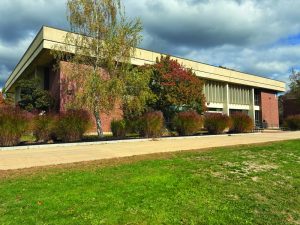
The library building on the Haverhill Campus of NECC
The library building on the Haverhill campus. Photo by Tristan Taylor

Books are a primary form of media and educational material.  

They contain stories or historical information, some of which have influenced modern society as it is known today.  However, in the United States, book censorship is becoming increasingly common.  During the 2023-24 school year, over 6,500 books were banned in 23 states.

At Northern Essex Community College, book bans have become a big topic.  

One student, Adriel Santos, said “I don’t believe there is a type of book that nobody should be allowed to read.”

Many students and faculty on the campus of Northern Essex say they feel a similar way.  

Another student, Matt Branscombe, described banning books as “dumb,” further stating “unless a book’s active purpose is to spread hate, it shouldn’t be banned.”

Other students have expressed concern on how banning books affects education, with Jake Axford stating “I think banning books is a problem as it negatively affects learning.”  

Axford went on to argue another point, as he felt concerned about the consequences of banning books, stating “I think books are a part of education and banning them is erasing history.”

It is also important to take a look at the history behind these bans.  

Books are protected under the First Amendment, and book bans are widely considered a violation of freedom of speech.  Furthermore, the Supreme Court case Board of Education v. Pico established that school boards could not, under any circumstances, ban a book simply because they disliked ideas and topics promoted in said book.

In the United States, most books that have been banned contain at least one of three main topics, those being sexuality, race, or gender.  Free speech advocates say this is a key piece of Project 2025, the Heritage Foundation’s proposed plan to reshape the federal government and to consolidate power in favor of right-wing political policies and ideologies.

There are organizations dedicated to stopping book bans, including the American Library Association and Amnesty International, which have jointly hosted “Banned Book Week” since 1982, aiming to celebrate and draw attention to the freedom to read and the requirement to keep all materials public in order for individuals to form their own opinions.

For now, books are being banned, and some may argue that it’s a violation of the freedom of speech and the freedom to read.  

However, at Northern Essex Community College, banned and challenged books are still accessible, and many students are making it known that they disagree with the practice of banning these materials.

Political divisions drive discussion: The continued quest to find unity and dialogue

In the United States, political divisiveness is often covered in the media.  Whether it’s President Donald Trump’s policies or speculation regarding the 2028 Democratic Party primaries, it’s become an inescapable topic for the average American.

Since the 2016 election, the nation has shifted away from moderate and bipartisan politics and towards more extreme affairs of state. 

Some people think the Republican Party has rearranged its main ideologies, backing away from the moderate stances of John McCain and Mitt Romney, and instead moving further right on the political spectrum to build a strong foundation around President Donald Trump.  

Meanwhile, others would say the Democratic Party has made a series of moves to appeal to politically moderate Americans, unsuccessfully attempting to build their new foundation around former Vice President Kamala Harris during the 2024 election, causing some voters to instead back the Green Party’s nominee, perennial candidate Jill Stein.

According to NPR, 70% of Americans feel as if they are on edge or afraid because of the current political state in the country.  

When asked if he considered himself part of the 70%, Northern Essex Community College student Grey Smolar said “Yes, because if you look at what’s happening currently with our president, where he’s stating frivolous stuff like ‘Tylenol causes autism,’ that’s gonna cause people to be on edge.”

  He further stated “It stresses me out a lot, because we don’t know what’s coming next.”

Smolar’s thoughts are echoed by many other Americans, who feel as if political divisiveness is not only growing, but starting to trickle down into other aspects of everyday life.

One prominent example of the divisiveness spreading is the suspension of the ABC late night talk show Jimmy Kimmel Live!  

Kimmel has been a strong opponent of the second Trump administration, and has publicly called out many conservatives, including President Trump, Utah Gov. Spencer Cox, Attorney General Pam Bondi, and White House Deputy Policy Chief of Staff Stephen Miller. During the opening monologue of his Sept. 15 show, Kimmel criticized these figures over the finger pointing and blaming of the fatal shooting of conservative political activist Charlie Kirk on the “radical left.”

After backlash from may prominent conservative figures, the show was placed under indefinite suspension, which lasted from Sept. 17 to Sept. 23, shocking many and causing backlash from more liberal viewers.  Despite the suspension ending on Sept, 23, ABC affiliates owned by Nexstar Media Group and Sinclair Broadcast Group continued to boycott the show until Sept. 26.  

One Northern Essex Community College student, Rowan Rockwell, felt that it was a violation of free speech and stated “I’m glad this gripped people, because it’s important that free speech be taken seriously, and I don’t think it has been for a while now.”

Now, amidst a government shutdown, many feel as if the political state of the country is only going to get worse.  

University of New Hampshire student and Northern Essex Community College alum Jasmine Dionne says she’s afraid of the current division because “no one can have a civil conversation about it without there being an argument.”

 Dionne also says that she feels frustrated regarding the political climate.

Right now, America is divided, but on the campus of Northern Essex Community College, students say they wish for a sense of unity.

First North Koreans set to debut in K-Pop

Defectors will get chance to share their artistry

Korean pop music, or K-Pop, has taken the world by storm in the last half decade or so, with South Korean artists, called “idols”, dominating global charts as of late. In 2012, Psy’s “Gangnam Style” became the first K-Pop song to reach the t

A man looking at the camera and saluting
Hak Seong (BE BOYS) Photo courtesy of Kpop Wiki

op spot on the Billboard Hot 100. 

In 2018, BTS became the first K-Pop act to debut at the top of the Billboard 200, with the album Love Yourself: Tear.  However, 2025 will bring something new to the table, as for the first time in history, three North Korean idols are expected to debut as members of two different groups.

A man lying down holding his head with his hands
Hyuk (1Verse) Photo courtesy of Kpop Wiki

K-Pop, while extremely popular in South Korea, is actually banned in North Korea, which claims that the genre undermines the country’s socialist ideology and strengthens the democratic influences of the southern half of the Korean peninsula, which is seen as a threat.  Additionally, the government believes that the genre could diminish support for the Kim dynasty.

1Verse, a group under the record label Singing Beetle, initially made headlines in October of 2023, when the company announced that North Korean defectors Hyuk and Seok would be joining the group, at the time known as a pre-debut trainee team called SB Boyz. 

The two were scouted by Singing Beetle founder Michelle Cho, who had heard of the two through friends.

Man leans on his arm and looks at the camera
Seok (1Verse) Photo courtesy of Kpop Wiki

Hyuk, from Kyongsong County in the North Hamgyong province of North Korea, has spoken publicly about his defection, recalling that he was doing farm work and hauling cement shipments by the age of 10, also stealing to provide food for his struggling family.

In 2013, at just the age of 13, Hyuk made the choice to defect so he could live with his mother, who had defected when he was younger. 

Seok, on the other hand, came from a family that was much more financially stable. 

Through his older sister, he listened to K-Pop at a young age, later buying videos of South Korean artists that were smuggled into the country illegally.  In 2019, Seok made the choice to defect at the age of 19.

The upcoming group had already gained attention due to one trainee, Kenny, having appeared on Asia Super Young.  Since the addition of Hyuk and Seok, the group has also announced that new trainees Aito and Nathan have joined.  1Verse is currently slated to debut in the latter half of 2025.

In April of 2025, OAK Company announced their new boy group BE BOYS would debut later in the year.  Among the members is Hak Seong, a North Korean defector who previously competed on Make Mate 1, making it to the final episode but finishing in 13th place, meaning he wouldn’t make his debut in the show’s resulting group, NouerA, which consists of the show’s top seven contestants.

Hak Seong has largely kept the details of his life in North Korea private.  In fact, he revealed that he was a North Korean defector during his time on Make Mate 1, and the only detail he has made public is when he defected, which was in 2017, when Hak Seong was just 13 years old.

BE BOYS has also announced fellow Make Mate 1 contestants Takuma and Won Cheon as members, alongside Build Up contestant Yun Seo, Fantasy Boys contestant Goo Hyun, and new trainee Min Joon.  They are expected to debut in the latter half of 2025 as well.

The debuts of these groups marks a major milestone in K-Pop, as Hyuk, Seok, and Hak Seong are set to make history as the first North Korean idols, and it is almost certain that more will follow.  Numerous entertainment agencies are openly scouting North Korean defectors as part of K-Pop’s expansion outside of South Korea. 

For now, the three of them serve as a reminder that overcoming extremes is possible.