As the calendar turns toward late March/early April, Northern Essex Community College (NECC) students have reached a critical juncture. The initial momentum of the spring semester is now being tested by an influx of mid-term exams, final project deadlines, and the fatigue that naturally accompanies this brutal, mid-semester grind.
While students often rely on campus support systems for structural guidance, some are turning to symbolic frameworks and cultural mythology to help categorize and navigate the shifting pressures of the term. In this edition of Tarot Talk, we examine the “Mid-Semester Crossroads,” utilizing three classic archetypes and a cautionary look at the “Sacrifice Mythos” to help students sustain academic momentum.
The Mid-Semester Compass:
Archetypes of Resilience
The following three archetypes reflect the transition from early-term planning to high-pressure academic execution.

1. Strength (VIII): The Psychology of Endurance
In historical tarot, “Strength” is characterized by “quiet fortitude” rather than physical force. Depicted as a figure taming a lion, this archetype emphasizes patience and self-control. For students facing the intensity of mid-term examinations, the lesson is clear: resilience is found in maintaining composure under pressure. Approaching demanding tasks with a steady, calculated pace is more effective than reacting impulsively to stressors.
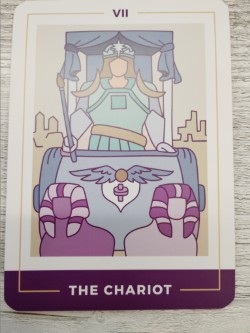
2. The Chariot (VII): Maintaining Academic Momentum
The Chariot symbolizes victory through disciplined willpower and singular focus. With two opposing forces pulling the vessel, the charioteer must exert absolute control to remain on course. This serves as an analogy for the modern student balancing multiple responsibilities, including coursework, professional employment, and personal commitments. Success in March is defined by the ability to prioritize and drive toward specific, measurable goals.

3. Two of Pentacles: The Mechanics of Multitasking
As one of the most resonant archetypes for the community college experience, the “Two of Pentacles” depicts a figure managing two rotating coins. It is a symbol of the constant balancing act required in higher education. This archetype acknowledges that for many students, academics are one of several competing priorities. The lesson is that equilibrium is a dynamic, ongoing process rather than a static state.
A Cultural Parallel: The Myth of the “Unbalanced Burden”
In the spirit of exploring the concept of mid-semester pressure, I decided to take a different approach. Instead of quoting a famous person, I want to look into the folklore of the video game Fatal Frame 2: Crimson Butterfly—specifically the legends surrounding Minakami Village, a fictional village located in Japan where the game takes place. In the backstory of the village, their survival was said to depend on many rituals of extreme sacrifice. However, the history of this “Lost Village” serves as a grim reminder that whenever a burden becomes too great or the “sacrifice” becomes barbaric? It leads not to salvation, but to a state of “Repentance”—a total collapse of the community in a figurative and literal sense.
For the modern student? This myth is an apt metaphor for academic burnout. We often feel that to in order tosucceed, we must sacrifice our sleep, mental health, and personal connections. But the lesson of this “unbalanced burden” is that a path built on unsustainable sacrifice is a path towards a personal “Lost Village.” True academic success does not require the loss of the self; it requires the Strength to set boundaries and the Chariot’s focus to navigate the term without losing one’s way.
Institutional Resources for Academic Continuity
As the semester enters its high-intensity phase, the following NECC resources remain available to assist students in managing their workload and maintaining academic standing:
Academic Coaching & Tutoring: For students facing mid-term evaluations, Tutoring Centers offer targeted subject-matter assistance.
Contact: 978-556-3411 | tutoringcenter@necc.mass.edu
Counseling Services: Professional support is available to discuss stress management and mental health when workloads feel unsustainable.
Contact: 978-556-3730 | counseling@necc.mass.edu
Academic Advising & Financial Aid: Advisors are available to help students realign their degree trajectory or address financial concerns.
Contact: 978-556-3700 | advising@necc.mass.edu | financialaid@necc.mass.edu
Remember that as we approach the midterms, this mid-semester period remains a defining moment for student success. By utilizing available campus tools and applying a disciplined approach to their schedules, students can ensure that this “crossroads” serves as a bridge to, rather than a barrier to, their academic goals.