
All posts by Lidia Ramirez, Editor-in-chief

Food ideas for all students at NECC

In these days that are difficult to deal with, there remains the concerns of food insecurity as the recent government shutdown threatened from the troubles within the federal system in the U.S. and the potential future impacts it may have on federal funded programs such as Supplemental Nutrition Assistance Program, that helps low-income families by providing monthly benefits to buy food. 
Yet there are other things that can be considered a useful idea that contribute to the need for food for students, accommodation or accessibility within the college. 

As you know, it is important for students to have enough food and receive the necessary amount of nutrients both at home and in campus to perform well in schoolwork and all other curricular activities. 

Some community colleges offer free meals to their students.

While ideas are being sought at Northern Essex Community College for a backup plan for food emergencies, we could consider more broad ideas like free meals for students at the campus. Some community colleges like The White Mountains Community College offer programs like Meals IncludED, that provides free daily meals for breakfast and lunch to their students and The Cabinet program is a pantry that offers students, staff and faculty free snacks, pre-packaged meals, and other grab-and-go items, according to the website for the college, www.wmcc.edu.

Already on the Northern Essex Lawrence Campus, we have a food pantry for students located in the Dimitry building. Recently, ideas for a second food pantry or food closet for the Haverhill Campus have pretty much become the most common idea communicated by students and staff.

I personally would propose the idea of another program that may or may not involve a free cafeteria but does provides free fresh cooked or cold meals. 

It is understandable that financially we may not be able to make a cafeteria happen, but my idea is to introduce more ways that we can bring fresh meals to students on at least one of the campuses. 

Maybe volunteers can cook, or students can run the program and the cooking with at least one staff or adviser just as students run The Observer Newspaper. 

At first, I began to think about small ideas to make free ready hot meals possible. One idea would require a good cook volunteer, a room dedicated to the program with all the appliances, food items, dining dishes, etc. 

Another small idea for free ready hot meals is a rice pot, where students can take as much rice as they want straight from a rice cooker, and another idea is toast in the morning that simply are available with a toaster ready for all to use with different varieties of bread.

 The food can be sourced from donations or from the college food pantry. 

Usually, the campuses have available snacks for students to grab and go through the different centers altrouhout the buildings and the food pantry that is accessible by appointment.

The kind of snacks and amount students can take are yet limited and the accessibility to the food pantry resource is more for at home food needs and is also limited on how many times a student can visit during a monthly period. 

Meanwhile the student food vouchers are also limited and are currently only available to use at the UTEC food truck or the Perfect Blend Cafe in the Spurk building. 

The food truck is only at Haverhill campus twice a month and at Lawrence campus twice a month or two Tuesdays a month for each campus.  With the new NECC bookstore, students can also buy snacks meanwhile the selling of hot food is currently under negotiation, it will still cost students and or be available to buy just with the student food vouchers, which usually are never enough.

The important point is that not all students have the money or funds to pay for everyday breakfast and lunch. Even students that do have some money end up running out of it and are not able to pay for food during however many remaining days of the week or month. Our community is not meant to leave anyone in the struggle. We are a community that has the potential to come together and work out beneficial ways to succeed together. 

Money could be used towards more convenient methods that save money and takes care of all students so that they do not have the financial burden on their stomachs which can impact their academic success.


Federal decline affects NECC students

We are in the times when a lot of strange changes are taking place in our country’s government offices. 

In the power of the hands of the current U.S. president, the Trump Administration has indeed everything to do with these woes. Many federal aid and assistance programs have been impacted, paused, or completely stopped. Programs that help aid education, healthcare, housing, food, and more have been affected too. 

Other victims like the Department of Higher Education, Havard, and the seven billion dollar Solar for All programs seem to be extreme priorities to either reduce or demolish. 

WIC is one of the programs that was also impacted after being paused and later clarified to continue. It almost seems unreal the kind of targets and unreasonable actions against them.  

The government shutdown began on October 1, 2025, but will begin taking effect in the month of November. It has reached everyone’s attention. This is the result of congressional failure of enacting funding legislation to finance the federal government before the fiscal year had begun. This significantly impacts Supplemental Nutrition Assistance Program (SNAP) by stopping or reducing benefits and restricting or limiting eligibility requirements. This is impacting on students and staff at NECC who use this program.  

Federal funding covers PACE TRIO program and if that gets interrupted or cut, students in the PACE TRIO program may be impacted. 

Out of all the changes that the government system faces, NECC students should come together to develop ideas to support their needs and those of the NECC community. 

It is important to remind students that the NECC provides food assistance including the Food Pantry in the Lawrence Campus, the Food Vouchers, and information for Community Resources. 

Students can reach out to the Dean of Students, Jason Arey for any inquiries, concerns, ideas, or information, jarey@necc.mass.edu.

Fellow NECC students and staff, would you advocate for a second food pantry to be opened in Haverhill Campus? 

Just as both Lawrence and Haverhill Campus have libraries, I think it would be easier for students if the Haverhill Campus also shares the food pantry even if the food amounts are divided. 

For any students impacted by healthcare due to the federal changes, it is a good reminder that NECC has also partnered with TimelyCare to provide 24/7 virtual health and well-being platforms at no cost and no limit. 

To access TimelyCare, students can go to TimelyCare.com/NECC or download the TimelyCare app from the app store to register using your NECC student email address.  


Shuttle transformation?

NECC shuttle bus by the curb in front of building.
NECC’s blue bus shuttle Photo by Melvin Perez

NECC students and even staff find the bus shuttles very useful during all the busy school days throughout the semesters. 

It has become a lifesaver for students that need to travel in between both Lawrence and Haverhill Campuses. The shuttles typically run every hour and even a few times in the late evening, picking up and dropping off students at both campuses.  

Before Covid-19, students had to deal with the burden of using the city buses to get to either campus, which could make it complicated due to the prolonged time it took for the city buses to get to whichever campus. Students would arrive late to class and because of this some students would not register for classes in either the Lawrence or Haverhill campus. After Covid-19, the NECC bus shuttle was reinstated, making every student’s life easier. Thus, student life couldn’t be a happy one if the NECC shuttle wasn’t operating. Students’ academic success as well as activity and engagement has improved since the shuttles began running again. Here at NECC, we hope that they continue to operate for as long as the campus lives because IT IS a part of campus life and not only do students need it, but even some staff members use it if they need a lift.  

One of the main thing’s students do consider is the size of the shuttles, usually most students say they prefer the shuttle that has more room, like the blue shuttle instead of the white athletic van. Though the shuttle has impacted student life significantly, several conflicts have presented and are possible to happen again like when too many students show up for the morning shuttle on the first day of school but don’t all fit in.

As morning classes are the fullest classes, it may not be surprising that many students plan to use the shuttle and show up for the shuttle to get to class or to get back. The question is, how would the driver know students’ schedules and or the number of students that will be taking the shuttle for each scheduled time?

One time at the beginning of the semester, too many students showed up in the morning to take the shuttle, but not all could make it to class because there was only a number of seats. Even though after that, the driver had arranged for back up shuttles, it is good to consider a better solution or ground communication plan so that extra shuttles that may not be needed, are not wasting gas, money, and time for drivers that do other jobs at the college.  

What if the school could create an app that would contribute as a service to the shuttle for students and staff? It could allow for students to register for the shuttles each semester, reserve seats, notify the drivers of any changes like potential delays due to a meeting or class ending at the exact time the shuttle leaves the campus, etc.

It may also allow drivers to view the schedules of students who sign up so that drivers know how many students they may expect. It could serve to reach out or communicate with the driver in case a student is two minutes away from reaching the shuttle before it leaves. This way, students don’t miss the shuttle too.  

I think it would be beneficial for the students for them to know when the shuttle is transitioning from campus to campus. I have no problem with an App that has a tracking device inside the shuttle as long as it is cost effective for the college.” Says Darren Stratton, who manages the coordination of the NECC shuttle transportation. 

 When asked, “Do you think that an App for the shuttle would help with things like improve communication with students and drivers?” Athletic director Dan Blair said, “I am not saying that the school shouldn’t nor that the school should create an App but if it does happen, it should be for more than just the shuttles.”  

Students say the shuttle is a benefit to them. 

“It saves us a lot of time, and we don’t need to use the public buses in Lawrence,” Says student, Melvin Perez.  

“Not only are the drivers friendly but allows for me to save a lot of time, energy, money, and planning. It’s a huge conservation innovation, which is especially important for commuters nowadays.” Student Linda Valenzuela agrees. 

Other students also agree that an NECC shuttle App is a good idea. 

“It is a great idea because it will help students to get to class.” Says student, Jake Axford.  

What other things could be considered if an app is created for students?  In what other ways could NECC app serve both students and staff? For the protection of the drivers and students, what may be some policies that can be enforced by the school? For example, all seatbelts must be worn, forms should be signed, etc. Students may reach out to the studentgovernment@student.necc.edu.  

a part of campus life and not only do students need it, but even some staff members use it if they need a lift.  

One of the main thing’s students do consider is the size of the shuttles, usually most students say they prefer the shuttle that has more room, like the blue shuttle instead of the white athletic van. 

Though the shuttle has impacted student life significantly, several conflicts have presented and are possible to happen again like when too many students showed up for the morning shuttle on the first day of school but didn’t all fit in. 

As morning classes are the fullest classes, it may not be surprising that many students plan to use the shuttle and show up for the shuttle to get to class or to get back. 

The question is, how would the driver know students’ schedules and or the number of students that will be taking the shuttle for each scheduled time? 

One time at the beginning of the semester, too many students showed up in the morning to take the shuttle, but not all could make it to class because there was only a number of seats. 

Even though after that, the driver had arranged for back up shuttles, it is good to consider a better solution or ground communication plan so that extra shuttles that may not be needed, are not wasting gas, money, and time for drivers that do other jobs at the college.  

What if the school could create an app that would contribute as a service to the shuttle for students and staff? 

It could allow for students to register for the shuttles each semester, reserve seats, notify the drivers of any changes like potential delays due to a meeting or class ending at the exact time the shuttle leaves the campus, etc. 

It may also allow drivers to view the schedules of students who sign up so that drivers know how many students they may expect. 

It could serve to reach out or communicate with the driver in case a student is two minutes away from reaching the shuttle before it leaves. This way, students don’t miss the shuttle too.  

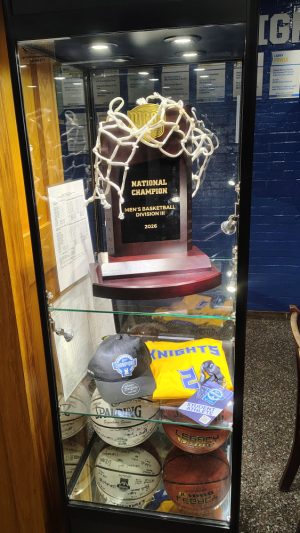
“I think it would be beneficial for the students for them to know when the shuttle is transitioning from campus to campus. I have no problem with an app that has a tracking device inside the shuttle as long as it is cost effective for the college,” says NECC’s  Darren Stratton, who manages the coordination of the NECC shuttle transportation, drives a shuttle and is the head basketball coach.

 When asked, “Do you think that an app for the shuttle would help with things like improve communication with students and drivers?” 

Athletic director Dan Blair said, “I am not saying that the school shouldn’t nor that the school should create an App but if it does happen, it should be for more than just the shuttles.”  

Students say the shuttle is a benefit to them. 

“It saves us a lot of time, and we don’t need to use the public buses in Lawrence,” says student, Melvin Perez.  

“Not only are the drivers friendly but allows for me to save a lot of time, energy, money, and planning. It’s a huge conservation innovation, which is especially important for commuters nowadays,” says student Linda Valenzuela agrees. 

Other students also agree that an NECC shuttle App is a good idea. 

“It is a great idea because it will help students to get to class,” says student, Jake Axford.  

What other things could be considered if an app is created for students?  

In what other ways could NECC app serve both students and staff? For the protection of the drivers and students, what may be some policies that can be enforced by the school? 

For example, all seatbelts must be worn, forms should be signed, etc. 

Students may reach out to the studentgovernment@student.necc.edu.  


Introducing a new editor-in-chief

In the world of Journalism, many institutions offer programs that allow students to interact with hands on experience in fields that are out in the real world. I remember being apart from my middle school news crew in seventh grade. Of course, I thought I couldn’t do this, or it wasn’t for me. I remember thinking, I am way too shy; how will I ever get the hang of being in front of a camera and interviewing people? Turns out, I was a good fit and I stayed in the news crew until I graduated middle school. The early stages of finding my passion for Journalism began there. I found other interests when attending a vocational school that offered a lot more hands on experience programs or shops. Though the vocational high school had a news crew of their own, I didn’t get involved after deciding to transfer to the most local four-year academic high school, Lawrence High. After graduating Lawrence High School in 2014, I became a student that same year in Northern Essex Community College. At first, like many, I didn’t know what I wanted to study and so my major was Liberal Arts.

Time and unexpected events overtake us all and in the mist of events, injuries, and the impact it had on my function and abilities, I got right back up when I was able and walked right back into my college. I don’t look at it as a gap of time, instead, I courageously claim it all back, despite whatever obstacles interrupted me then. I have always had a joyful heart and good spirit with motivation and determination. When I decide to do something, I make it my own. In other words, it is already mine. Boldy, I state that my case is not the same case as a student’s return, instead I as a student was waiting exultantly and the college, who hasn’t forgotten, is prepared for what it’s always been, to carry out students’ academic achievements.

Currently, I have now decided what I want to do, or what I want to study. I chose Journalism/Communications major. I still have many interests in different majors, some including Psychology, Criminal Justice, Forensic Science, Chemistry, Music, Human Services, History, Interpreting, Technology, Engineering, Film, and there is still more! One I didn’t add to the list though one of my top interests is Philosophy. I have contemplated for a while whether I should carry out taking and completing it as a second major. One thing is for sure; I love wisdom! I grew up with Christian upbringing, yielding much faith and reliance of support from praying, meditating, and drawing closer to the Almighty and his son, Christ. You’ll know shortly after hearing from me that I am a very spiritual person, even my family tells me because those are mainly what my baby stories are about.

One day, I want to try music school, maybe in Boston. Though I do plan on transferring to a four-year college to complete my bachelor’s in journalism and then eventually complete my master’s degree in some other college. I think it is good to work one’s way up, for my goals to reach higher as I am thinking about going for a PhD degree. We all know money is a necessity and security, but with a GPA of 3.0 while not yet finished my associates degree, I can only hope to receive the most aid in my academic favor, but also, I do not want to allow any anxiety of not using whatever aid I do have while it lasts. Being that with the current changes in the government today, we do not know what we will have tomorrow literally. Like a management tool, I don’t want to use too much, but I also don’t want to use too little. I’m a student that would rather have all A’s, even doing what it takes to get them.

I am a big animal person. I certainly have a place in my heart for domestic animals and wild animals all the same. A few Safari visits would be on my bucket list. Nature alone is entertaining to me, sunrises, thunderstorms, and our little animal critters are all a wonderful events and creations that I love to take photos of.

I think it’s a bit humorous that I didn’t mention photography and culinary in my major interests. These I already do daily, and I enjoy those hobbies. Outside of academic interests or passions, my hobby in singing and making music will always be my number one passion. To me it is not just about fun or knowing how to sing, but it is something special like communicating courage, compassion or other feelings and words from the heart. One powerful fact about the heart, each one has their own flow and the treasures in it, no one else has and the joy it shares, no one else can know. My theme is that the world really is one’s own, we make it what we want it to be.

Julia Alvarez visits

Four people standing on a stage smiling.
The White Fund gave Julia Alvarez a boquet of flowers. From left to right: Julia Alvarez, White Fund Board Trustees, James Dowd, Amita Kiley and David Abdoo. Photo by Editor-in-Chief Lidia Ramirez

Northern Essex Community College has begun the year with an appreciative and beneficial event, “Literature, Legacy, Community. An Evening with Julia Alvarez.” Sponsored by the White Fund and hosted by NECC’s Vice President Naydeen Gonzalez-De Jesus along with some staff members, the event took place on the Lawrence Campus during the evening of Oct. 2, where special guest Julia Alvarez was welcomed into the NECC community. Alvarez, who is a Dominican American writer and poet, has reached many people through her writing. She is known for her talent and success in writing books of both fiction and non-fiction. Even more honored she is the “voice” that the immigrant community has long fallen short to have. 

Each guest, including the staff and students, had the opportunity to meet Alvarez in person, ask her questions, hear what she had to say as well as her own advice, and get her autograph on their copy of her book.

An audience of people sitting in chairs.
Audience with NECC staff, students, and local guests. Photo by Editor-in-Chief Lidia Ramirez

Local guests from outside the NECC community like the Lawrence community and other local communities were happy to be there as they honored her with much applause and cherishing love and support, recognizing her the one whom many look to as one of the “heroes” of the immigrant community, one of few who has taken a stand to speak up and because of it, the world hears and understands the immigrant community better.

Among the many guests honored to have Alvarez was the first Dominican American Massachusetts  State Sen. Pavel Payano who shared with the audience his childhood memories on reading “How the Garcia Girls Lost their Accents” and how the three Garcia Girls stories resemble his parents’ experiences as he stated the words, “Their story was similar to my father’s story.” The Senator further expressed his gratitude to Alvarez as being one of the people who not only helped the immigrant community but he thinks of her as a close relative to him, who has helped make him who he is today. He showed this by awarding Alvarez with a Senator’s Citation of recognition for her devoted service and contribution to society. 

His final words to her in his speech, “Thank you so much for coming! Know that you have family here.”

During the interview, NECC’s Vice President Naydeen Gonzalez-De Jesus presented some interesting questions to lvarez such as, “When was the first time when you decided to put your thoughts into writing?” where Alvarez replied, “When I was 10 and I was not the kid that you would think would become a writer. Kids love to hear this; I flunked every grade through fifth grade. I was a terrible student; I had go to summer school, if I went to summer school they would pass me to the next grade because they would send notes home saying ‘Julia does not pay attention,’ I was bored it was during the dictatorship of Trujillo, the books were boring, they were propaganda, I was bored, you know the teaching was very punitive and memorization and parroting back what the teacher told you, and I, I just.. I think I was smart. I was bored. But the minute I got home, one of the tia’s or prima’s said “come here let me tell you a story” I would sit right there listening, listening. I had no trouble paying attention, I had trouble being bored. So, I was not a bookish kid. I was not a writer. I didn’t look like I was going to be scholarly material at all …. it took going to graduate school, I became a writer because I was lonely, I was an outcast, the kids weren’t very nice to me. 

“And so, I had a very good teacher who got me started in reading. I started reading and I discovered that in the world of imagination, everyone was welcome. 

“So, I wanted to be in that world, so I became a reader first. When you read, when you’re a reader, you realize that there’s some stories missing from the books that you’re reading … The stories only you can tell. 

“So, I wanted then to become a writer. I realized in graduate school that everything I was being taught by my teachers about timing, about humor, about character, about how to keep a tory moving, I learned in childhood about people, some of them didn’t know how to read and write but they could tell you a story. It was amazing. 

“So, I became proud of that oral culture that was the root system of my story telling.”

“I listened to Tia Melia, Lala, and all who had told me stories,” said. Alvarez.

“And now we’re reading you,” replied Gonzalez-De Jesus.

“Who me?” Alvarez replied.

“It’s a transition, you know, because of them, I’m here, and because of me maybe there’s going be something to writers because they’ve read Garcia girls and say, 

“This can be me, you know I can be a writer too.””

Another important question Gonzalez-De Jesus asked Alvarez was, “What is real and what is not real when you’re writing what you are trying to communicate to the reader?”, where Alvarez replied, “I guess you know, I’m always transgressive when I’m shown a border, um, I want to cross over, I want to bridge it. And so, the real and the unreal really I mean some things that you hear you can’t make that stuff up, it’s so weird you know. And so, I think that we all live in a world in which there’s a, It’s not a dividing line that you cross that you can measure quantities and especially us Dominicans, I mean we have stories and we have people see things and um you know, and they believe them and I believe them. I think that the world of you know what we call unreal, its all around us. -I used to tell my father, “Magical realism.”

When Alvarez was asked what Dominican history influenced her, she replied, “I wanted to understand, make meaning of what I and my sisters went through with immigration. I was interested in the stories of my parents’ time, in the lost generation. It was a generation that couldn’t speak. Like what it was to grow up with the fear inside a female body. Trujillo had siege over any woman. It’s that silence that interests me. It’s not a silence, it’s a silenced person who feels that they are not worth anything. That part that I had to keep silent, it went on paper.”

More advising words from Alvarez to the audience were, “Part of what I love about writing is that I get to disappear, I become my characters, I meditate. This is why I recommend reading. It is the most activist thing you can do. When you read, you become someone else and it’s powerful, the muscles of compassion get stretched.” 

When guests had a chance to ask Julia Alvarez questions, one guest asked, “Should we be worried for the magical fear?”

 Alvarez responded, “I think those of us who afford to be brave cannot shut up.” She went further on to say, “Those of us who can speak up need to take care of the others who can’t speak up.”

As the evening was heading to an end, Dr. Naydeen Gonzalez-De Jesus asked Mrs. Alvarez, “The person, the writer, what would you like to be remembered by?

Alvarez responded, “My work, that’s what I like to do.”

Gonzalez-De Jesus then recited, “So, known by your resilience and your determination.”  

Inevitably, all the guests including Northern Essex staff and students were touched by Alvarez words which surely reached everyone’s heart. The night became an inspiring one, an empowering one, and certainly a memorable one.